Billfold Machine Embroidery Design: In-the-Hoop Wallet
A Craft Fair Designer’s First Impression
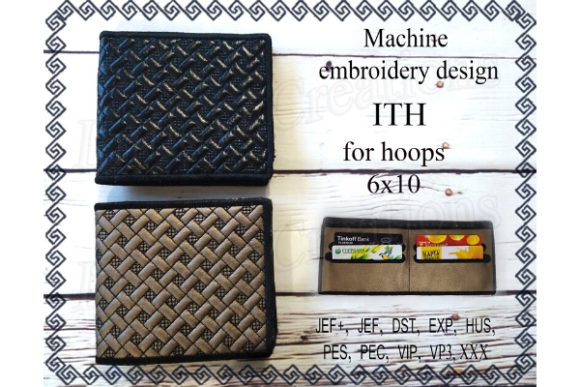
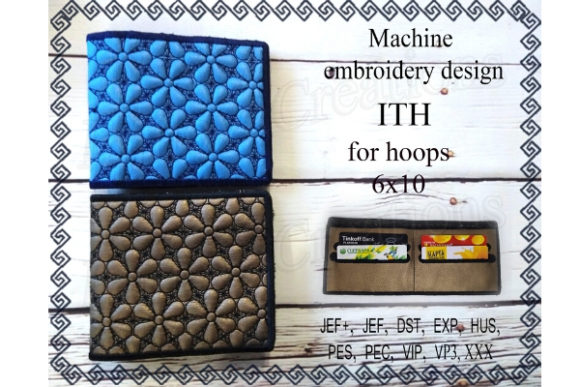
Right off the bat, Billfold Machine Embroidery Design. in the Hoop. Wallet for Banknotes reads like a confident, functional statement—not whimsical or decorative, but purpose-built. It feels modern, minimal, and quietly premium. There’s no floral scrollwork, no cartoon motif, no seasonal flair—just clean utility wrapped in embroidery language. That’s exactly what makes it stand out on a craft fair table crowded with embroidered tea towels and patchwork totes. Customers scanning for something *new* but still *handmade* pause here: a wallet that’s stitched, not sewn; engineered, not improvised.
Where It Shines in Your Product Line
In my booth lineup—tote bags, aprons, tea towel sets, embroidered patches, fabric pouches, and pillow covers—the Billfold Machine Embroidery Design. in the Hoop. Wallet for Banknotes anchors the “functional handmade” category. It doesn’t compete with your floral apron embroidery or playful tote bag design; instead, it complements them as a giftable, personal, and surprisingly luxurious small shop product. I’ve seen customers pick up an embroidered market bag, then immediately ask, “Do you have anything like this—but smaller? For cards or cash?” This design answers that question before they finish speaking.
As a finished product, it performs best when made as a standalone in-the-hoop wallet—sturdy cotton twill or medium-weight linen, top-stitched edges, subtle metallic thread accents. On aprons or tea towels? Not ideal. The design isn’t meant to be scaled down into an accent—it’s structural, dimensional, and built around precise pocket placement. Trying to shrink it onto a corner of a kitchen towel would flatten its intent and muddy its clarity. But as an embroidered patch? Yes—with caveats (more on that below).
Real-World Production & Selling Notes
This is not a “throw-it-in-and-go” machine embroidery design. Its strength lies in intentionality: every seam, fold, and pocket is calculated. That means it’s highly repeatable for batch production—if you test first. I recommend making at least three real mockups before fair day: one on light fabric, one on mid-tone textured linen, and one on a darker substrate. Why? Because stitch density matters more here than in most designs. Dense areas (like folded flaps or reinforced card slots) can pucker on soft knits or overwhelm delicate weaves.
Photographing the Billfold Machine Embroidery Design. in the Hoop. Wallet for Banknotes for Etsy listings or printable mockups is straightforward—flat-lay on marble or raw wood, with a single banknote peeking from the slot. It reads instantly: “handmade wallet,” “machine embroidered,” “in-the-hoop precision.” No caption needed. That visual clarity translates directly to booth appeal: customers understand value in under two seconds.
Careful-Use Considerations
- Dense stitch areas: Avoid heavy stabilizer buildup—opt for cutaway + tear-away combo on medium-weight wovens. Skip it entirely on stretch fabrics.
- Tiny details: The inner piece curve (noted in the description: “When the wallet is folded the inner piece is curved a little…”) is intentional—not a flaw. Don’t force flattening; embrace the gentle contour as part of the handmade character.
- Small lettering or fine lines: None present—this is a shape-driven, structural design. That’s a win for legibility across fabric textures.
- Dark fabric: Works beautifully—especially with tonal thread or matte black bobbin thread. Just confirm thread contrast during test runs.
- Curved surfaces: Not suited for caps or curved pouches. Stick to flat or gently folded panels.
Design Impact on Your Brand & Booth
The Billfold Machine Embroidery Design. in the Hoop. Wallet for Banknotes elevates perceived quality without demanding high-end materials. A $24 wallet made from $3 fabric reads like a $45 boutique item because of its crisp folds, precise alignment, and zero visible seams—only embroidery stitches holding function together. That builds trust. Customers touch it, flip it open, slide in a card—and suddenly your whole booth feels more considered, more professional.
For Etsy sellers and digital embroidery file shops, this design adds serious credibility. It signals technical fluency—not just decorative skill, but engineering-for-function. Pair it with clear video demos (showing the fold, the curve, the snap closure) and it converts faster than abstract monogram files.
Embroidery Designer Checklist Before Fair Day
- Test the Billfold Machine Embroidery Design. in the Hoop. Wallet for Banknotes on scrap fabric matching your final product—same weight, same weave, same dye lot.
- Check thread contrast: dark thread on light fabric? Light thread on dark? Matte vs. rayon sheen?
- Review spacing between elements—especially where folded edges meet. Tight gaps can vanish in stitching.
- Confirm hoop size compatibility with your machine. If it requires a 6x10 or larger, note that for your product specs.
- Inspect stitch density visually—not just in software. Overly dense zones may require reduced speed or adjusted tension.
- Use the right stabilizer: cutaway for structure, lightweight tear-away for surface detail. Never skip stabilization on the inner piece—it carries the curve.
- Create at least one fully finished, photographed mockup before listing or displaying.
- Compare how it looks across three fabric colors—cream, charcoal, and olive—to ensure brand consistency.
- Verify commercial licensing terms. As a craft fair seller or Etsy seller, you need explicit permission to sell finished products made from this digital embroidery file.
Final Thought: A Quiet Standout
In a sea of bold, bright, and busy craft fair products, the Billfold Machine Embroidery Design. in the Hoop. Wallet for Banknotes wins by being quietly indispensable. It’s not shouting for attention—it’s waiting for the customer who already knows what they want: thoughtful construction, tactile quality, and the quiet pride of owning something handmade *and* highly functional. For sewing and embroidery professionals building a sustainable small shop product line, this isn’t just another machine embroidery design. It’s a conversation starter, a trust builder, and a consistent seller—week after weekend, fair after fair.