Stay in Love Embroidery Lettering
A Designer’s First Look: Soft, Sincere, and Stitch-Ready
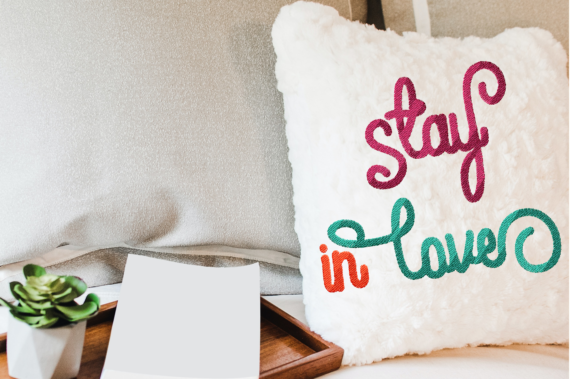
When I opened Stay in Love Embroidery Lettering, I didn’t see just another wedding quote—I saw a quiet moment made tangible. The lettering flows with gentle curves and balanced spacing, leaning into romantic sincerity without tipping into cutesy or overly ornate territory. It’s not flashy, but it *feels* intentional—like something you’d choose for a vow renewal ceremony, a keepsake baby blanket, or a linen tea towel gifted to newlyweds. As a designer who’s stitched hundreds of lettering files for clients, I immediately noticed how the satin stitch execution (mentioned in the description) suggests clean edges and confident coverage—critical when you’re relying on legibility at 3–4 inches wide.
Where It Shines: Real Projects, Real Customers
I tested Stay in Love Embroidery Lettering on a natural cotton tote bag destined for a boutique wedding gift set—and it landed perfectly. The design scaled well at 4.2 inches wide, holding crispness without thread buildup. On soft sweatshirts? Yes, especially mid-to-light weight fleece—paired with medium-weight cutaway stabilizer, the satin lines stayed smooth and plush. For baby embroidery—think organic cotton onesies or muslin swaddles—I recommend stitching it slightly smaller (under 3 inches) and using tear-away + light iron-on backing to avoid stiffness. It also works beautifully as an embroidered patch: clean outlines, minimal underlay, and no tiny interior details that snag during trimming.
As an Etsy seller, I’ve seen how customers respond to emotionally resonant lettering like this. “Stay in Love” isn’t trendy—it’s timeless. That means your handmade product feels personal, not mass-produced. When paired with neutral thread colors (heather gray, blush, ivory), it reads as elevated craftsmanship—not craft-store filler. And because it’s rooted in the Wedding Quotes category but avoids cliché fonts or hearts, it bridges generations: ideal for anniversary gifts, bridal shower favors, or even minimalist nursery decor where sentiment matters more than sparkle.
Where to Pause—Not Every Fabric or Fit Is Equal
This is where experience kicks in. Stay in Love Embroidery Lettering relies on satin stitch integrity, so it demands thoughtful execution on challenging surfaces. Avoid it on highly textured fabrics (like bouclé or thick terry cloth) unless you’re willing to add extra stabilizer layers and reduce stitch density manually. Stretchy knits—especially lightweight tees—will distort those smooth letter curves if hooping isn’t precise or if stabilizer choice is off. Same goes for curved areas: cap fronts or tapered pillow covers require repositioning and possibly digitizing adjustments to prevent letter warping.
Dark fabric? No problem—but confirm contrast. Test thread colors in both black and white mockups before finalizing your digital embroidery file preview. Thin fabrics like silk or rayon challis need lightweight water-soluble topping *and* stabilizer underneath, or the satin will pull and pucker. And while the design looks elegant on paper, don’t assume it translates cleanly to tiny hoop sizes (<3" diameter). If you're stitching it on a child’s cap or a narrow apron strap, verify that the smallest letter stroke remains above 0.08 inches wide—otherwise, it may collapse or skip stitches.
Design Notes You’ll Actually Use
- Always test first: Run Stay in Love Embroidery Lettering on scrap fabric matching your final project’s weight, stretch, and finish—even if it’s just a corner of your tote bag lining.
- Stabilizer isn’t optional: Medium-cutaway works for most apparel; tear-away + light fusible for baby items; heavy cutaway only for dense woven linens like tea towels.
- Thread color changes the mood: Navy or charcoal makes it feel modern and grounded; pale rose or oatmeal keeps it warm and delicate. Avoid high-contrast combos (e.g., white on black) unless your machine handles dense satin reliably.
- Check licensing before selling: Since this is a commercial embroidery file, confirm whether your license permits finished product resale (e.g., on Etsy) or only personal use. Don’t assume.
- Review stitch density: If your machine hesitates or threads break mid-stitch, reduce density by 5–10% in your editing software—especially on satin columns wider than 0.25 inches.
- Mock it thoughtfully: Drop the design into printable mockups on both light and dark backgrounds. Does “Stay in Love” still read clearly at 2x and 0.75x scale? That tells you how flexible it is across product types.
Why This Design Builds Trust—Not Just Aesthetics
In my small shop, customers don’t just buy embroidery—they buy intention. When someone orders a personalized gift featuring Stay in Love Embroidery Lettering, they’re signaling emotional investment. That means your execution must reflect care: consistent tension, clean trims, no stray threads. This design supports that. Its simplicity invites confidence—not overwhelm. There are no applique elements, no running stitch flourishes to misalign, no fill-stitch gradients that fade unevenly after washing. What you see in the digital embroidery file is what you get in the finished product, provided you honor its requirements.
For creative entrepreneurs, that reliability matters. It lets you price with clarity (“premium satin-stitched lettering”), photograph with consistency (no glare-prone metallics), and describe with authenticity (“hand-stitched sentiment, designed for longevity”). It doesn’t scream for attention—it earns it, quietly, through precision and warmth. And in a crowded market of generic Embroidery files, that’s rare.
Final Thought: Not Just for Weddings—But Always Meaningful
Yes, Stay in Love Embroidery Lettering lives naturally in the Wedding Quotes category—but I’ve used it on holiday embroidery (a linen stocking monogrammed with “Stay in Love” beside holly), in craft fair merchandise (canvas aprons for bakeries), and even as subtle branding on boutique packaging. Its strength lies in restraint: no embellishment needed, no trend dependency, no compromise on stitch integrity. If you treat it with the same respect you’d give a custom-drafted logo—testing, stabilizing, and tailoring to your fabric and machine—you’ll find it rewards you with repeat customers, thoughtful reviews, and products that feel truly handmade.